Torosaurus
A large ceratopsian dinosaur with one of the largest skulls of any known land animal.
Explore the fascinating creatures that ruled the Earth for over 150 million years. Learn about different species, their habitats, and the mysteries of their extinction.
Explore DinosaursTry adjusting your search or filters
A large ceratopsian dinosaur with one of the largest skulls of any known land animal.
Known for its thick, domed skull which may have been used in head-butting contests.
A large predator with sharp teeth and claws, often called the "lion of the Jurassic".
One of the longest dinosaurs with a whip-like tail and neck perfect for browsing vegetation.
A medium-sized predator distinguished by the horn on its snout and osteoderms along its back. The word Ceratosaurus means horned lizard. As a mid-sized theropod, Ceratosaurus ranged from 17 to 25 feet (5.2 to 7.6 meters) in length.
A large sauropod with a boxy skull and spoon-shaped teeth, among the most common Jurassic dinosaurs.
Formerly known as Brontosaurus, this massive sauropod had a long neck and whip-like tail.
Known for the distinctive twin crests on its head, this predator was larger than commonly depicted. It also lacks the venom spitting abilities and the frills that was made popular in the media
A distinctive predator with bull-like horns and extremely short arms, even for a theropod.
A genus of sauropod dinosaurs that gave its name to the diverse group Titanosauria.
A giant carcharodontosaurid theropod that may have hunted in packs to take down large prey.
A large, flightless bird that dominated as a predator in South America after the extinction of non-avian dinosaurs.
Start of the Mesozoic era, also known as the age of reptilians. Small, bipedal dinosaurs like Eoraptor and Herrerasaurus emerge. Though the dinosaurs in this era were not the ones we associate the name today with.
Learn MoreLarge sauropods like Brachiosaurus and predators like Allosaurus dominate. The actual start of the classic dinosaurs we know today. Such as Stegosaurus, Diplodocus and the first birdlike theropod Archaeopteryx.
Learn MoreT. rex, Triceratops, and Velociraptors roam the Earth before the mass extinction. The final chapter of the dinosaur era, marked by incredible diversity and the rise of flowering plants. Also this is the most famous period due to the dinosaurs that lived in it being the most popular ones. Many classic dinosaurs that first comes to mind belongs to this era.
Learn MoreFollowing the K-Pg mass extinction, avian dinosaurs (birds) evolved into gigantic forms. Phorusrhacidae, or 'terror birds', grew up to 3 meters tall, with axe‑like beaks for crushing prey. They reigned as top predators in South America for over 60 million years – living proof that dinosaurs never truly disappeared.
Learn More"Lizard‑hipped" – hip bones arranged like modern lizards.
Includes two major groups:
"Bird‑hipped" – hip bones superficially similar to modern birds.
Includes:
Explore significant fossil finds that have shaped our understanding of prehistoric life, including details about their discovery, geographic origins, and scientific importance.
Late Jurassic (150 mya)
One of the most important transitional fossils, showing both dinosaur and bird characteristics.
Solnhofen Limestone, Bavaria, Germany
1861 (first specimen)
Initially found by quarry workers, studied by Christian Erich Hermann von Meyer
Provided crucial evidence for Darwin's theory of evolution, demonstrating the link between dinosaurs and birds.
Various periods
Trace fossils that provide evidence of dinosaur movement, behavior, and social structure.
Glen Rose Formation (Texas), Purbeck Beds (England), Lark Quarry (Australia)
1930s (Paluxy River tracks), 1970s (Lark Quarry trackway)
Revealed dinosaur speeds, herd behavior, and predator-prey interactions
Provide direct evidence of behavior that can't be determined from bones alone.
Mostly Cretaceous (100 mya)
Fossilized tree resin preserving incredible details of small organisms and sometimes feathers.
Hukawng Valley (Myanmar), Baltic region, Dominican Republic
2016 - First dinosaur tail in amber, 2019 - Ancient bird skull in amber
Lida Xing (China), Ryan McKellar (Canada)
Revolutionized understanding of feather evolution and preservation of soft tissues.
Late Cretaceous (67 mya)
The most complete, best-preserved Tyrannosaurus rex specimen ever discovered.
Cheyenne River Indian Reservation, South Dakota, USA
August 12, 1990
Sue Hendrickson, for whom the fossil is named
90% complete skeleton providing unprecedented insight into T.rex anatomy and paleobiology.
Try adjusting your filters
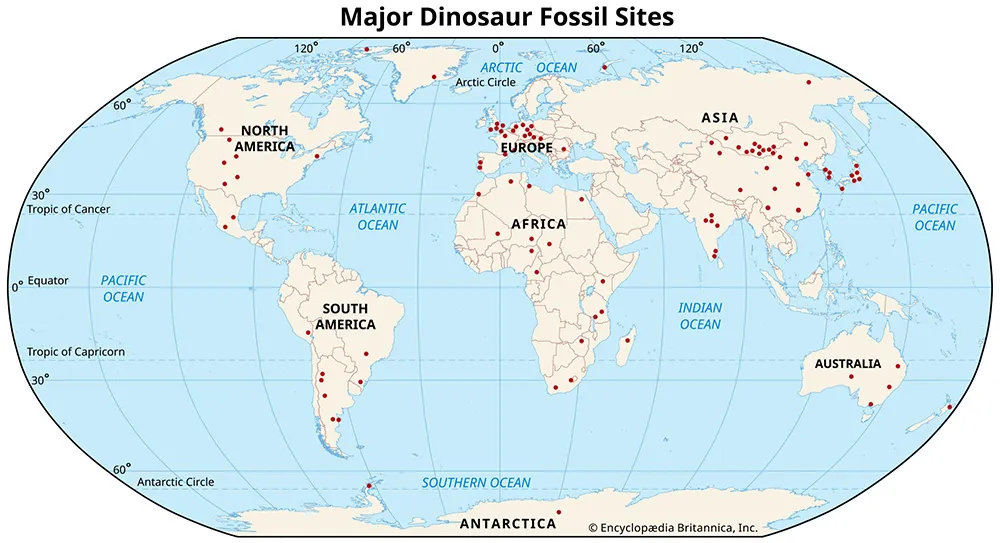
Explore the geographic distribution of significant dinosaur fossil discoveries around the world.
Do you have a favorite dinosaur that's not featured here? Want to share interesting facts or suggest improvements?
We'd love to hear from you! Your contributions help make Dinopedia more comprehensive and accurate.
Welcome to Dinopedia, your ultimate interactive encyclopedia dedicated to the prehistoric world. Our mission is to bring the fascinating era of non-avian dinosaurs and ancient marine reptiles to life with up-to-date paleontological data.
Whether you are researching the terrifying bite force of the Tyrannosaurus rex, exploring the massive spans of ancient timelines, or tracking historic fossil discoveries, Dinopedia provides a clean, robust, and accessible platform for dinosaur enthusiasts of all ages.