Dinosaur Footprints
Trace Fossils That Tell a Story
Dinosaur footprints, also known as ichnites, are trace fossils that provide unique insights into dinosaur behavior, movement, and social structure that bones alone cannot reveal.
These impressions in rock were made when dinosaurs walked across soft ground, leaving behind a record of their presence that has lasted millions of years.
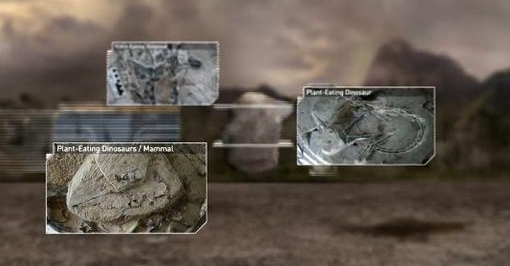
Sometimes footprints of larger Sauropods are found to contain fossilized remains of other preserved smaller dinosaurs that got trapped in the mud while following the larger dinosaurs.
One example of Argentinosaurus contained fossilized remains of 18 smaller dinosaurs in its footprints leading to new discoveries.
What Footprints Reveal
- Speed and gait of dinosaurs
- Social behavior (herding, hunting patterns)
- Size and weight estimates
- Environmental conditions of the time
Famous Footprint Sites
Significant dinosaur trackways have been found around the world, including:
- Dinosaur Ridge, Colorado, USA
- Dinosaur State Park, Connecticut, USA
- Lark Quarry, Australia
- Zhaoqing, China
Preservation Process
Footprints were preserved when dinosaurs walked on soft sediment like mud or sand that later hardened into rock. The most common preservation occurs when the print fills with different sediment than the surrounding material, creating a natural cast.
Scientific Value
Unlike body fossils, trackways capture moments in time, showing exactly how dinosaurs moved across the landscape. They provide evidence of dinosaur behavior that can't be deduced from skeletons alone, such as herding behavior, hunting strategies, and interactions between species.